
 Throughout 2011 we will be publishing extracts from The New Learning Architect. Here is the third part of chapter 1.
When you are a professional, others seek you out for your particular expertise in a field or discipline. They will expect you to behave in accordance with the ethics of your profession, with their interests as client to the foremost.
The learning architect will be familiar with the tools of their trade, in particular the methods and media that can be used to facilitate learning. Educational and training methods are relatively timeless, even though we sometimes update the labels (‘job aids’ become ‘performance support materials’), so Socrates would have had much the same choices available when designing his ‘interventions’ as we do now. However, we are constantly rethinking the methods we should use in particular situations, in the light of new thinking about the process of learning at work, continuing research into learning psychology and, more recently, huge advances in the field of neuroscience. An l&d specialist who was inducted into the profession thirty years ago would now be seriously out-of-step with current thinking if they had not engaged in continuing professional development (CPD). Keeping up-to-date is especially important when you consider that l&d has been saddled with more than its fair share of pop psychology, much of which has gone unchallenged for far too long.
Educational and training methods are important because they determine the effectiveness of an intervention. The learning architect has to understand which methods will work in which situations, or risk pouring yet more hard-earned corporate dollars down the drain. Each organisation is different and each functional area within each organisation is likely to be different too. The learning architect has to strike the right balance in each case between formal, non-formal, on-demand and experiential learning to meet the particular learning requirement for the particular target audience, and in consideration of the practical constraints and opportunities. They also have to make a judgement on how much of this design for learning needs to rely on top-down initiatives from management and how much can be managed effectively by employees themselves from the bottom-up.
The learning architect also has to be up-to-date with developments in learning media, the technologies through which learning strategies are realised. Our hypothetical l&d specialist of thirty years back would have been fully conversant with all the available media of the time, the flip charts and whiteboards, overhead projectors and video players. Unfortunately for the learning professional, learning media do not stand still like methods – we have seen an almost exponential growth in available media as computers and mobile devices interact over high-speed networks. Whichever method you intend to use in an intervention, you have many more choices when it comes to the means of delivery. Do you want to hold that discussion in a face-to-face workshop, in a live online session, through a teleconference or using a forum? If you want to share some content do you print out a booklet, stick it on a web page or record it as a podcast?
The learning architect does not have to be an expert in each new technology, just as an architect of buildings does not need to be a skilled carpenter or glazier. But they do need to know the essential characteristics and properties of each medium, the opportunities and limitations that these afford and the applications for which they are best suited. There can be no such thing as a technophobic learning architect, any more than there is an architect of buildings who hasn’t come to terms with the basics of plumbing and electrics.
Coming next: What it means to be a professional
See chapter 1, part 1: Architects for learning
See chapter 1, part 2: Learning occurs in many contexts
Obtain your copy of The New Learning Architect
Author: Clive Shepherd
A practical guide to creating learning podcasts: part 1 – coming to terms with podcasts
 The simplest way to look upon a podcast is as an audio recording. Strictly speaking, podcasting is a more sophisticated concept than this, which involves a user subscribing to an ongoing series of recordings, which are then automatically downloaded to the user’s computer as they are released, and then copied to the user’s iPod or similar MP3 player for listening to as and when the user wishes. In practice, once you have produced a learning podcast, you don’t really mind how it is accessed. Yes, lots of users will find it convenient to listen to the recordings on their iPods while they commute to work, walk in the park or workout in the gym, but they might find it just as useful to listen to the podcasts directly from their PC or even from an audio CD.

Media elements
A podcast can employ only one media element and that’s audio. Although, in general use, podcasts will often contain music, for learning purposes the primary component will usually be speech. As an alternative verbal channel to text, speech benefits because it conveys tone of voice as well as the words, but the listener is not able to control the pace at which the words are delivered. Delivery of the spoken word is much slower than the speed at which a person can read, which makes a podcast an unsuitable tool for reference information. Although audio does have limitations as a stand-alone medium, it allows the listener to maintain visual attention on the environment around them, which they would certainly need to do if they were on the move.
For more information on audio as a medium, see our posting The elements of online communication: audio.

Interactive capability
A podcast is a passive medium with no interactive capability except simple navigation. As such, its use is limited to the following learning strategies:
- Exposition – required listening as part of a set curriculum
- Exploration – as developmental material for use by learners at their own discretion
Podcasts could also act as supporting material within other strategies – instruction and guided discovery – but only as one element in a blend.
Applications
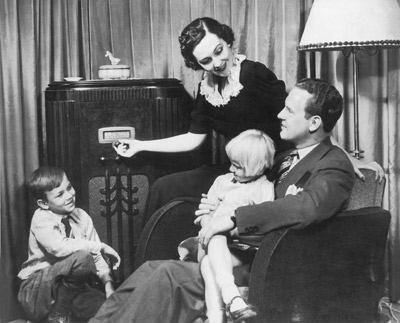
While limited in terms of media elements and interactive capability, podcasts have a great many applications. You should be encouraged by the success of radio over more than eighty years. Radio has the same limitations – audio only, no interaction – yet continues to entertain and inform hundreds of millions of people daily. While it is easy to think of podcasts as a way of delivering monologues – such as lectures – you will rarely find this technique in use on the radio. The best applications employ multiple voices and a lively, informal style. Consider using podcasts for interviews, panel discussions, debates and drama. Wrap these up in familiar radio formats such as news shows, plays, talk shows, reports from the field, journalistic investigations and so on.
Part 2 – Preparing for and recording your podcast
Download this series of posts as a PDF
Learning occurs in many contexts
Throughout 2011 we will be publishing extracts from The New Learning Architect. Here is the second part of chapter 1.
Most of us go to work in order to perform tasks in return for some mix of money, status, recognition and job satisfaction. We may be lucky enough to have a job that allows us also to contribute to some greater good; we may enjoy the work itself and the company of our fellow employees, customers or suppliers; we may also choose a particular job because it has the potential to satisfy our career learning objectives. Learning may or may not be the reason we go to work, but it is an inevitable consequence, whether or not the employer or employee makes a deliberate attempt to promote it.
The learning architect has to appreciate the many contexts in which learning takes place within the working environment:
Learning can be formal, in the sense that it is packaged up as a ‘course’, with pre-defined entry requirements, a structured curriculum and content, professional facilitation and some form of assessment. Formal learning interventions can be based on individual study or group work, they can be delivered face-to-face or online, or as some blend of all of these. They play a valuable role in ensuring that employees obtain the critical skills they need to carry out their jobs, although only a small fraction of what employees learn in their working careers can be traced back to these interventions.
Learning can be non-formal, in that, while it prepares the employee to carry out their current or future job responsibilities, it is not so formalised as to constitute a ‘course’. One-to-one approaches, such as on-job instruction, coaching and mentoring constitute the majority of non-formal learning, although employers may also choose to run conferences and short workshops for groups of employees, or to provide resources, such as white papers, podcasts and videos for individual use.
Learning can be on-demand, in the sense that it occurs as an immediate response to a work-related problem, rather than in advance; it is ‘just-in-time’ rather than ‘just-in case’. In many jobs there is now more to know than can ever be known and such a rapid turnover of knowledge that it simply makes no sense to try and ‘teach’ every aspect of every job up front. On-demand learning can be supported from the top-down through the provision of performance support materials and help desks, or facilitated as a bottom-up activity through search engines, forums and wikis.
Learning can be experiential. Much of what we learn at work does not occur deliberately, as we ‘learn to’ do something to meet a current or future need; rather it occurs as we ‘learn from’ our own experiences and what we observe of the experiences of others. Experiential learning can be allowed to just happen of its own accord, but the new learning architect will want to help create an environment in which it flourishes, to create the true ‘learning organisation’. Employers can support experiential learning in many ways: through job enrichment and rotation, through performance appraisals and project reviews. They can also encourage employees to reflect on their experiences through techniques such as blogging.
Coming next: The learning architect is a professional
See the first part, Architects for Learning
Obtain your copy of The New Learning Architect
Architects for learning
Throughout 2011 we will be publishing extracts from The New Learning Architect. We start as you would expect at the beginning, with the first part of chapter 1:
Architects as we usually know them
An architect is someone who creates the plans from which others build.
An architect of buildings designs environments for living. Only rarely will they be designing an environment in which they themselves will be living. More typically they will be responding to a very specific brief that reflects very particular requirements. Before they put pen to paper, the architect simply has to know the following:
- What type of building is required – a home, an office, a factory, a school, a hospital? What functions must this building perform?
- How many people will be using this building? What activities will they be carrying out? What are these people like?
- What constraints are placed on the design of the building in terms of budget, time, quality, regulations?
The architect of buildings has a professional responsibility to their client. They are expected to be up-to-date in terms of current materials and methods, and in the latest developments within science and engineering as they relate to construction. They use this knowledge to provide their client with a building that will be safe, durable, maintainable and efficient, while meeting the requirements of the brief within the given constraints. They could be swayed by other motives – their own desire to experiment and innovate, allegiances to current fashions and philosophies, perhaps the prospect of winning an award – but if they do, they risk compromising on their duty to their client.
Meet the learning architect
A learning architect designs environments for learning. Like the architect who designs buildings, the learning architect will be responding to a specific brief:
- What is the nature of the learning requirement? What knowledge, skills and attitudes is the employer (the client) wishing to engender in the employees working within the business, division or department in question? How will this learning contribute to effective performance?
- What jobs are carried out in the target area? How many people are doing these jobs? What are these people like in terms of their demographics, prior learning, ability to learn independently, their motivation and preferences?
- Under what constraints must this learning take place? How geographically dispersed is the population? How much time and money is available? What equipment and facilities can be deployed to support the learning?
The learning architect also has a professional responsibility to their client. This requires them to be fully conversant with current thinking in terms of learning methods, acquainted with the latest learning media and up-to-date with developments in the science of learning. As none of these is intuitive and obvious, the client cannot be expected to have this expertise. And for this reason, it is neither sufficient nor excusable for the learning architect to act as order taker.
The responsibility of the learning architect is to their client. As with the architect of buildings, other motives can come into play – the desire to experiment and innovate, loyalty to the latest fads and fashions, the glamour and glitz of the awards ceremonies – but should they be tempted, they risk failing to meet the requirement within the given constraints.
‘Architect’ might sound like a grand title for someone other than a head of learning and development or what the Americans like to call a Chief Learning Officer, but remember that architects of buildings tackle small jobs like extensions as well as office blocks and whole housing estates. They start off working with other architects and they gain experience over time.
You don’t become a learning architect by calling yourself one; you also have to behave like one. An architect of buildings does not carry the bricks or paint the walls, although they do keep a watchful eye on these activities in case their plans need to be revised or updated. They don’t have to supervise every activity, but they do need to watch the numbers, so they can react if budgets and timeframes are being exceeded.
The learning architect does not need to directly facilitate learning or be present in all those situations in which learning might be taking place. However, they must know whether or not the learning that is occurring is in line with their plans and their client’s requirements, and that all this is happening at an acceptable speed and cost. And because the only constant in the modern workplace is change, they must be agile enough to respond to shifting requirements, new pressures and emerging opportunities.
Coming next in chapter 1: Learning occurs in many contexts
Obtain your copy of The New Learning Architect
Bridging the e-learning skills gap

SkillsJourney is a project initiated by Clive Shepherd and Barry Sampson in 2009 and now integrated fully into Onlignment. The purpose of the SkillsJourney project is to help in meeting the e-learning skills gap. What skills gap, you ask? Well, take a look at this presentation on SlideShare.
The e-learning skills matrix
One of the first tasks undertaken within the project has been to define an e-learning skills matrix. This has been designed to help organisations to assess the impact of e-learning on the roles of learning & development professionals, subject experts, e-learning specialists and other personnel, to identify skills gaps, and to locate resources that would help in bridging any gaps. For this process to work well, each learning and development position has to be assessed against the matrix, to see which skills apply and at which level; each job holder has to be assessed against the skills applicable to their particular position; and each available learning resource and intervention has to be reviewed to determine the skills that it addresses and to which level.
You are welcome to download the e-learning skills matrix and take a look for yourself. We’d be interested to know if we’ve missed anything important. I’m sure you’ll let us know.
Meet the new learning architect
We are all learning machines, constantly adapting to the ever-changing threats and opportunities with which we are confronted. We learn through experience, whether consciously or unconsciously; we learn by seeking out the knowledge and skills we need to carry out our day-to-day tasks; we learn by sharing experiences and best practice with our colleagues, and by taking advantage of opportunities for development, both formal and informal.
The new learning architect designs environments that enable specific target populations to take maximum advantage of all these opportunities for learning. To do this they need to understand the unique characteristics of their clients and the business challenges they are facing; they need to find just the right balance between top-down and bottom-up learning initiatives, between the formal and informal.
The new learning architect is at the vanguard of the next generation of learning and development professionals, taking advantage of the latest tools, technologies and thinking to help organisations meet the acute financial, time and environmental pressures of the 21st century.
In the next month Onlignment will be publishing my latest book The New Learning Architect. This will be available not only in hard copy and in a variety of e-book formats, but also as a series of posts to this blog throughout 2011. Each month we will be publishing here a whole chapter of the book, as well as a profile of an exemplary learning architect from around the world. These posts will not only enable the whole work to be made available for free, they will also allow for comment and discussion on what are some major issues facing learning and development.
Expect the first posts by the end of this month.


Saying no
In Why you need to set limits, Cathy Moore explains why it is sometimes necessary for the content developer to say ‘no’. Only so much is achievable with one piece of content – if you try and please everyone, you end up pleasing nobody.
I couldn’t agree more. While your learning objectives define the end point for a learning intervention, your target population can be seen as the start point. If your target population is relatively homogeneous, the route from start to end will be clear to see. However, if you have a diverse target population, with very different characteristics, then you are going to need to plan some very different journeys. There’s no guarantee that the same content (or any other ingredient in your intervention) is going to do the job on each one of those paths.
So what is it about a particular target audience that could make a big difference to the route you take? What are the characteristics that really matter?
- Demographics (age, gender, ethnicity, etc.): Sure these might matter in some circumstances, but you’ve got to be careful not to let your prejudices get in the way. There are more important factors.
- Preferences: There are more than six billion people in the world and each one’s brain is wired differently. What there are not are clear-cut categories of preferences that will help us to design content. See learning styles don’t exist, then keep looking.
- Prior knowledge / skill: Now, here we have something important. Those with a fair amount of past experience with a topic or skill are going to find it much easier to extend and enhance what they have. They have all sorts of well-honed mental models in place which help them to come to terms easily with new ideas. Novices need structure and support, because they are easily overwhelmed. Experienced people don’t need all this and might find the whole process patronising and frustrating.
- Degree of independence: Psychologists use the term ‘metacognitive skills’ to describe the attributes of independent learners who seem to be better than most at working out what they don’t know, what they need to know and how to bridge the gap. Like experts, they don’t need as much support and structure.
- Interest / motivation: This is a big one, because if some of your audience is going to take some convincing that your content is important to them, then you’re going to have to take whatever measures are necessary to sort this out. If you go through this process with well-motivated learners, you’ll slow them down and frustrate them.
Obviously there will be times when you can organise your material in such a way that you can accommodate more than one user type. What you have to recognise is when the client is asking too much and it simply isn’t possible. As Cathy says, you need to set limits.
Towards an alternative e-learning
In many ways, e-learning is doing well. The Towards Maturity Impact Indicator report published last December showed that many UK organisations are experiencing significant benefits from e-learning in terms of efficiency and business agility. Learning Light’s recent survey of the UK e-learning market showed growth of 8% in obviously difficult economic circumstances.
However, it took the more recent Towards Maturity2010 Benchmark Report to show that the true picture is rather less encouraging. It would appear that face-to-face classroom courses are being converted lock, stock and barrel into self-paced, self-directed, online courses as a panic solution to a lack of funds. There is plenty of evidence to suggest that these decisions are being made hastily and unimaginatively as a defensive measure, and certainly not out of a heartfelt desire for e-learning. Most depressingly, the report suggests that a high proportion of users feel that the e-learning they are being offered is irrelevant to their jobs, probably as a simple tick-in-the-box compliance measure. When you consider how rich a learning environment the Internet is capable of providing (and does do for many of us outside work), this is a tragic waste of a wonderful opportunity for enlightened change.
The term e-learning is only a little over 10 years old, but in its most common form (interactive, stand-alone, self-study tutorials) it actually dates back to the late 1970s and has therefore been around long enough now to be considered traditional. This format certainly is efficient and agile, as the figures suggest (and when resources are tight, these benefits are definitely worth having), but they’re not the only measures that matter. Efficiency and flexibility only matter if you are doing the right things in the first place. What really matters is whether e-learning is delivering in terms of improved competence.
While there is much really excellent traditional e-learning, much of what is inflicted on learners falls short in a number of ways:
- It fails to engage and inspire.
- It is over-long and information heavy.
- It is insufficiently relevant to employees’ jobs.
- It provides inadequate opportunities for collaboration with peers.
- It fails to provide the learner with opportunities for personal support.
- In the way it is applied, it repeats many of the mistakes of the classroom courses it replaces, particularly when it is used primarily for sheep dipping and compliance. We need less courses and more resources.
- It is designed and developed without consultation with learners or learners’ managers and is not continuously enhanced and improved in response to feedback from these stakeholders.
- At a time when there are so many interesting ways in which online media can be employed (as video, podcasts, mobile apps, 3D environments, games and sims), it remains dull and uni-dimensional.
The end result is that e-learning is neither as popular nor as effective as it should be. It is time to envisage an alternative e-learning – just as efficient, yet more flexible, more engaging, more responsive, more powerful.
With alt-e-learning, the lengthy, interactive tutorial will be only one of many options available. The emphasis in terms of content will shift instead to tightly-focused, highly-modular media objects that can be employed on both a ‘push’ basis (as elements in top-down learning interventions) and ‘pull’ (accessed on-demand). Not all of these objects will originate with the l&d department, as subject experts from across the organisation become empowered and incentivised to contribute to the learning of their peers. The objects will be accessible on all sorts of devices (often as mobile apps) and come in many forms:
- short how-to videos
- podcasts (especially interviews and discussions)
- screencasts that demonstrate software tasks
- easy-to-learn but hard-to-master games
- engaging quizzes
- decision aids
- visually-rich slide shows with narration or big, bold text statements
- highly-adaptive tutorials, that feel more like coaching sessions than instructional materials
- case studies and scenarios
- drill and practice exercises for those skills that can be honed on a computer
- exploratory 3D objects and environments
- interactive timelines and maps
- polls and surveys
Importantly, this content will often be integrated with a wide variety of collaborative online experiences:
- 1-2-1 coaching and support
- research assignments using the World Wide Web or an organisation’s intranet (learners can present their research with a live online presentations or packaged as videos, podcasts, etc)
- collaborative content creation using wikis and other tools
- online discussions using forums and blogs
- live online lessons and discussions
Alt-e-learning provides an online experience that mirrors how we use technology outside work, which your typical traditional tutorial certainly does not. It also blends seamlessly with face-to-face activities and offline media such as print. Many of the elements of alt-e-learning will already be available to you or can be put in place at low cost and without heavy reliance on outside specialists. And because alt-e-learning is so modular, the elements are easy to re-use, enhance and maintain.
Onlignment is committed to the alternative e-learning. We’d like to think we’re not alone.
The benefits of the virtual classroom
This YouTube video was created by Common Craft for GoTo Training to explain the benefits of the virtual classroom:
Why I'm not going to speak from a script again
For some reason, there are lessons that take a long time to learn – however often an action leads to negative consequences, you just seem bound to repeat it. One lesson I really hope I have now learned is that reading from a script doesn’t work – at least not for me. In the past few years I have tried this in numerous situations:
- giving speeches (such as at the E-Learning Awards a week or so back)
- when presenting a Pecha Kucha (that’s 20 slides each displayed for 20 seconds if you’ve yet to be initiated)
- when recording a screencast (it sounds so much better when improvised)
- when recording a podcast (free-form interviews work much better)
There are good reasons for thinking that reading from a script will work. After all, the best TV presenters do it convincingly. And you can be absolutely sure that you’re going to cover every point clearly. However, reading from a script doesn’t work well in a face-to-face setting because it forces you to lose eye contact with the audience for sustained periods. And even when you’re recording a voice-over it’s really hard not to come over as wooden and rather boring.
Can it be made to work? Well, perhaps, but professionals have one of two advantages: either they’ve got the luxury of a teleprompter, which allows them to retain eye contact with the audience or camera; or they’ve rehearsed well enough that they’ve got so familiar with the words that they only need to refer to them periodically. As Mark Twain said,”It usually takes me more than three weeks to prepare a good impromptu speech.”
I’ve made two resolutions. First, to avoid having to use any type of script if at all possible. Far better to trust in your instincts and talk around some key headings. Second, where a tight structure is absolutely essential, make sure I write the words to be spoken and not read, and then put in the hard work as actors do and learn your lines.
As a natural speaker, my father is my model here. He would quite happily get up and speak at any occasion. He never prepared and he never had a single note. He just said the right thing without fuss and sat down again. No slides and few jokes, but effortless.